Four Myths That Keep Americans Overpaying for Prescriptions — and the Truth Behind Each One
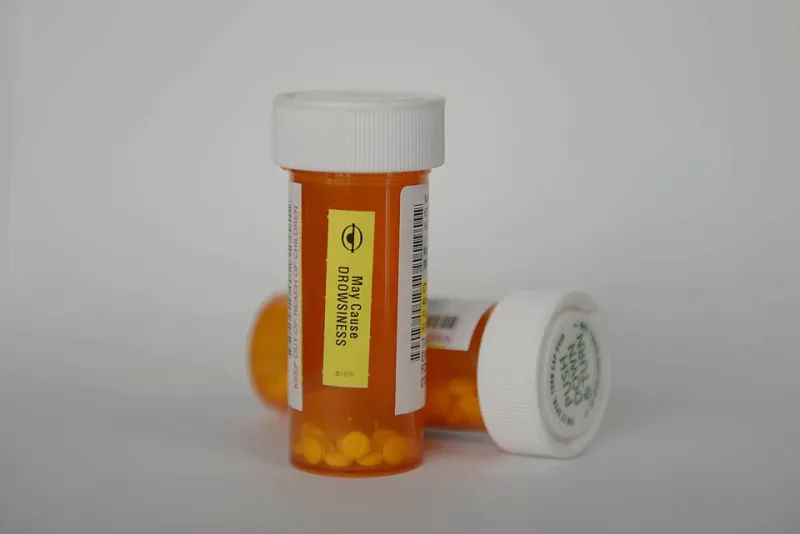
Photo: Airman Valerie Monroy, Public domain, via Wikimedia Commons
Somewhere along the way, a set of assumptions hardened into conventional wisdom: buying medication in Mexico is illegal, dangerous, and guaranteed to end with a customs officer dumping your bag in a bin at the border. None of these claims survives contact with the facts — yet they continue to cost uninsured Americans hundreds of dollars a month in prescriptions they could otherwise afford.
It's time to sort the outdated fears from the current reality.
Myth #1: "It's Against the Law, Period"
This is the big one, and it's simply wrong as stated. US law has long permitted individuals to import certain medications for personal use under well-established personal-importation practice — generally a supply of roughly 90 days, with a valid prescription, for a genuine personal medical need.
That is not a loophole or a gray zone for the medications most Americans cross the border to buy: blood pressure drugs, statins, insulin, inhalers, antibiotics requiring prescriptions, and everyday generics. Where the law tightens considerably is around controlled substances, which face stricter rules on both sides of the border and deserve genuine caution.
The accurate framing isn't "illegal" — it's "legal with conditions." Meet the conditions and you're operating within normal practice, not breaking one.
Myth #2: "Everything From Mexico Is Counterfeit"
The counterfeit-fear narrative dates largely to coverage of unlicensed street vendors and rogue online sellers — a real problem, but one that says nothing about the licensed pharmacy sector.
Mexico has a formal, regulated pharmaceutical industry. Its major chains operate under federal health authority oversight, source from many of the same multinational manufacturers that supply US pharmacies, and increasingly sell generic medications produced in facilities that export to regulated markets worldwide. The active ingredients in a Mexican generic are, in many cases, chemically identical to what's in the American bottle — because they come from the same global supply chain.
Does counterfeiting exist in Mexico? Yes, as it does in the United States. Is it a reason to avoid licensed, established pharmacies? No. It's a reason to shop the way you should shop anywhere: look for licensing, choose established chains over informal vendors, inspect packaging, and buy medications you can verify.
Myth #3: "Customs Will Confiscate Everything"
Ask anyone who actually makes regular border pharmacy trips what happens at the crossing, and the answer is usually: not much. Travelers carrying personal-use quantities of prescription medications, in original packaging, with receipts, routinely cross without incident.
Confiscation stories almost always involve one of three things: controlled substances without documentation, commercial quantities clearly intended for resale, or medications in unlabeled bags that give inspectors nothing to verify. In other words, the problems are almost entirely avoidable with basic discipline.
The practical formula is simple:
- Keep medications in original, labeled packaging.
- Carry copies of your prescriptions.
- Stay within personal-use quantities — typically a 90-day supply.
- Keep your receipts.
- Declare when in doubt; honesty resolves most questions at the counter.
Myth #4: "Mexican Drugs Are Inferior Quality"
This myth carries a whiff of something older than pharmaceutical policy — a vague assumption that anything from a less wealthy country must be lesser. The reality is more mundane: Mexico's pharmaceutical sector is one of the largest in the Americas, home to major domestic manufacturers whose products are exported across the region and beyond.
Generic medications in Mexico are held to national bioequivalence standards, and many of the best-known brands on Mexican shelves are produced by the same multinational companies Americans buy from at home. A statin is a statin; metformin is metformin. What varies is the price, not the molecule.
Where quality variation genuinely can appear is at the margins — informal markets, unlicensed sellers, expired stock. That's an argument for buying carefully, not for avoiding the country's legitimate pharmacies altogether.
A Framework for Deciding for Yourself
Strip away the myths and what remains is a straightforward decision process:
- Is the medication non-controlled and prescription-appropriate for you? If yes, personal importation within standard limits is well-trodden ground.
- Can you buy from a licensed, established pharmacy? If yes, quality risk drops dramatically.
- Can you verify what you're buying? Original packaging, clear labeling, known manufacturer — the same checks you'd apply anywhere.
- Have you told your US doctor? A physician who knows what you're taking can keep your care coherent.
The Cost of Believing Old Information
The most expensive thing about these four myths isn't misinformation itself — it's the prescriptions Americans skip, stretch, or ration because they believe crossing the border is either forbidden or foolish. For millions of people, neither is true. What's true is that a licensed Mexican pharmacy, visited with reasonable care and documentation, is a legitimate part of how a growing number of Americans manage the cost of staying alive and well.
The myths had their moment. The facts have been waiting patiently behind them for years.