Evaluating a Mexican Pharmacy Without Speaking Spanish: A Practical Field Guide for American Visitors
For millions of Americans who travel to Mexico each year seeking affordable medications, the experience of walking into an unfamiliar pharmacy can feel disorienting. Street-facing storefronts vary enormously in presentation, staff attire, and product selection — and without a working knowledge of Spanish, it can be difficult to distinguish a well-regulated establishment from one operating at the margins of compliance. The reassuring reality is that credibility leaves visible traces. Language fluency is not a prerequisite for reading them.
This guide walks through the concrete, observable signals that separate trustworthy Mexican pharmacies from questionable operations — and provides communication strategies that function regardless of your Spanish proficiency.
Why Visual Assessment Matters Before You Say a Word
In regulated pharmacy environments, compliance is not invisible. Mexican pharmacies authorized by COFEPRIS — the Federal Commission for Protection against Sanitary Risks, Mexico's equivalent of the FDA — are required to display specific documentation, maintain storage standards, and operate with licensed personnel present during dispensing hours. These requirements produce visible evidence that an attentive visitor can evaluate without exchanging a single word.
Before you approach the counter, take sixty seconds to observe the environment as a whole. First impressions carry diagnostic weight here.
Licensing and Certification Displays
Legitimate pharmacies in Mexico are required to post their operating license, known as a licencia sanitaria, in a visible location — typically near the entrance or behind the main counter. Look for framed or laminated official documents bearing government seals. The COFEPRIS logo, a stylized emblem associated with Mexico's health regulatory authority, may also appear on signage or window decals.
Additionally, pharmacies that employ a químico farmacéutico biólogo (a licensed pharmacist) often display that professional's credentials on the wall. The absence of any posted documentation is itself a signal worth noting. Chain pharmacies such as Farmacias del Ahorro, Benavides, and Similares consistently maintain visible compliance materials — a useful benchmark when assessing independent locations.
Inventory Organization as a Quality Signal
How a pharmacy stores and presents its products reflects its operational standards. In well-run establishments, medications are arranged systematically — typically alphabetically or by therapeutic category — with clear labeling, intact packaging, and no visible signs of moisture damage or sun exposure. Refrigerated medications, including certain insulins and biologics, should be housed in properly functioning cold-storage units with accurate temperature displays.
Conversely, pharmacies that pile products loosely on open shelves, display medications with torn or faded packaging, or store items in conditions inconsistent with manufacturer guidelines are signaling a lack of procedural rigor. These are not merely aesthetic concerns — improper storage directly affects drug efficacy and patient safety.
Pay particular attention to the dispensing counter itself. A clean, organized workspace where staff handle medications deliberately, rather than hastily, reflects a culture of care that extends to the products being sold.
Staff Behavior and Professionalism
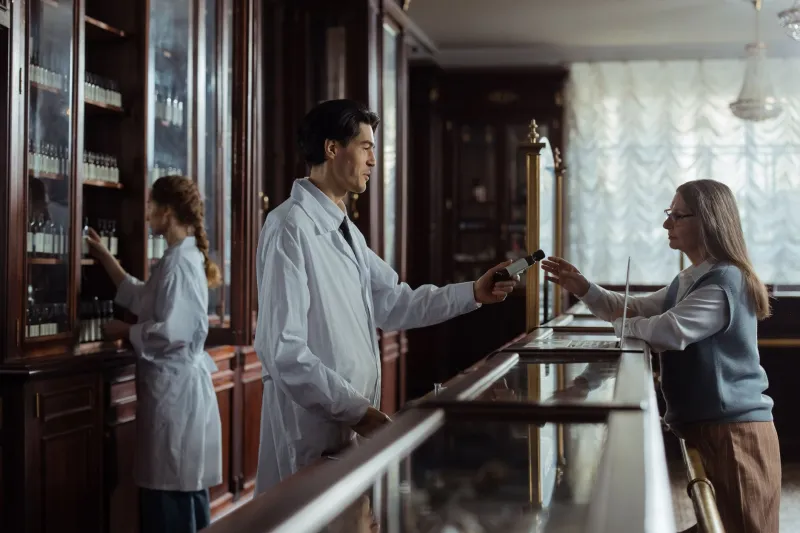
You do not need to understand Spanish to observe how pharmacy staff conduct themselves. Watch how personnel interact with customers ahead of you in line. Do they take time to review prescriptions carefully? Do they ask clarifying questions before dispensing? Are they wearing identifiable uniforms or lab coats, and do those garments appear clean and professional?
In Mexico, a licensed pharmacist is not always present at every pharmacy at every hour — this is a known regulatory gap that affects smaller independent establishments more than national chains. However, staff who appear rushed, dismissive of prescription requirements, or willing to dispense controlled substances without documentation are exhibiting patterns that should prompt you to seek an alternative location.
Prescription Practices as a Credibility Benchmark
One of the most reliable indicators of a pharmacy's operational integrity is how it handles prescription medications. Legitimate pharmacies request a valid prescription (receta médica) for controlled substances and certain antibiotics, even when those same drugs might be available over the counter at lower-quality establishments. If a pharmacy offers to sell you a controlled medication without asking for documentation, that willingness should raise immediate concern — not because the medication is necessarily counterfeit, but because it signals the pharmacy is not operating within regulatory boundaries.
If you arrive with a US prescription, a reputable pharmacy will take time to review it, even if the staff member's English is limited. Bring printed documentation, and use your phone's translation application to bridge communication gaps. Most major pharmacy chains in Mexican border cities and tourist destinations have staff accustomed to working with American patients and will make reasonable accommodations.
Non-Verbal Communication Strategies That Work
Language barriers are surmountable with preparation. Several strategies have proven effective for English-speaking Americans navigating Mexican pharmacy environments:
Use your phone as a translation bridge. Google Translate's camera function allows you to point your device at printed text — including medication labels, dosage instructions, and posted notices — and receive an instant translation. The app's conversation mode can also facilitate basic exchanges with staff in real time.
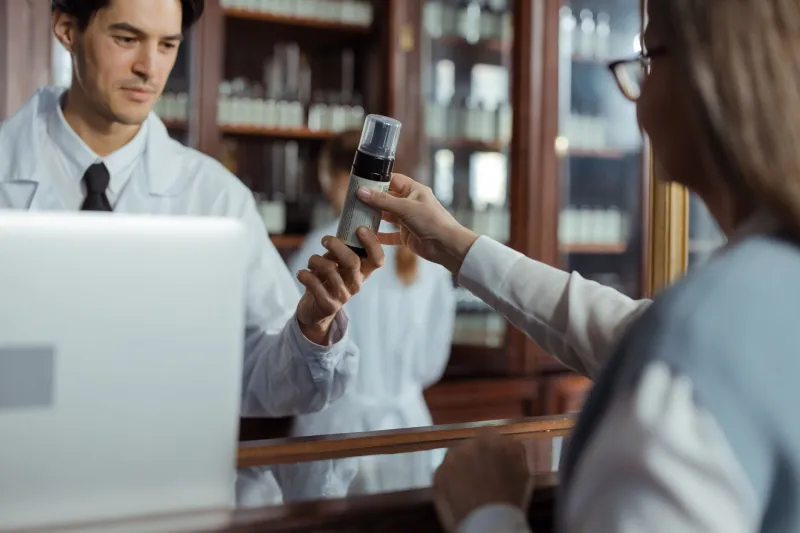
Bring written documentation. Before your trip, prepare a printed or digital document listing the medications you need, including the generic (International Nonproprietary Name) and brand names, dosages, and quantities. Generic names are consistent across Spanish and English, which significantly reduces confusion at the counter.
Show, don't describe. If you are purchasing a medication you already take, bring the original US packaging. Staff can cross-reference it directly without requiring verbal explanation.
Use pharmacist-facing apps. Several platforms now provide medication lookup tools specifically designed for cross-border patients, allowing you to confirm Mexican equivalents and standard pricing before you enter any establishment.
Red Flags That Transcend Language
Certain warning signs are universally legible regardless of the language spoken on the premises:
- No visible licensing documentation near the entrance or counter
- Medications stored in direct sunlight or at apparent room temperature when refrigeration is required
- Staff who do not request a prescription for medications that typically require one
- Pricing that deviates dramatically below market rate without explanation
- Packaging that appears tampered with, resealed, or inconsistent in print quality
- Reluctance to provide a receipt or formal purchase documentation
Any single one of these signals warrants caution. Multiple signals together constitute a clear basis to leave and find an alternative provider.
Choosing Established Chains as a Default Starting Point
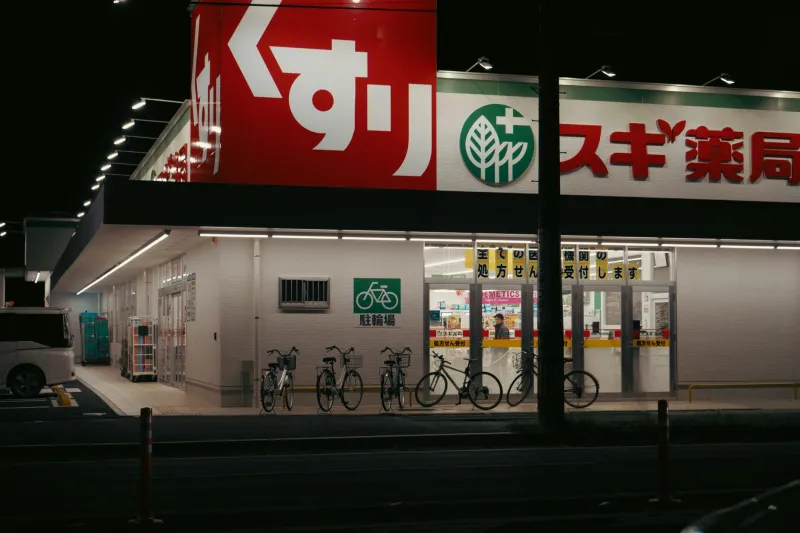
For Americans visiting Mexico for the first time or traveling to an unfamiliar city, national pharmacy chains offer a reliable baseline. Farmacias del Ahorro, Farmacias Guadalajara, and Farmacias Similares maintain standardized operating procedures, trained staff, and consistent inventory practices across their locations. While independent pharmacies can and do offer legitimate services — sometimes with more personalized attention — chains provide a degree of predictability that is particularly valuable when you are assessing an unfamiliar environment.
PharmMexico maintains an ongoing resource directory of verified pharmacy locations and cross-border health services designed specifically for American patients. Consulting that directory before your visit can help you identify pre-vetted options in your destination city, reducing the need for on-the-ground evaluation in unfamiliar territory.
The Informed Visitor's Advantage
Language is one dimension of communication — but attentiveness, preparation, and an understanding of what legitimate pharmacy operations look like will carry you further than fluency alone. The same critical eye that guides smart consumer decisions at home applies with equal force in a Mexican pharmacy. Quality leaves evidence. So does its absence.
With the right framework, American visitors can access the substantial cost advantages that Mexican pharmaceutical markets offer while maintaining the safety standards their health demands.