Seven Services Hiding Behind the Mexican Pharmacy Counter That Most Americans Never Ask About
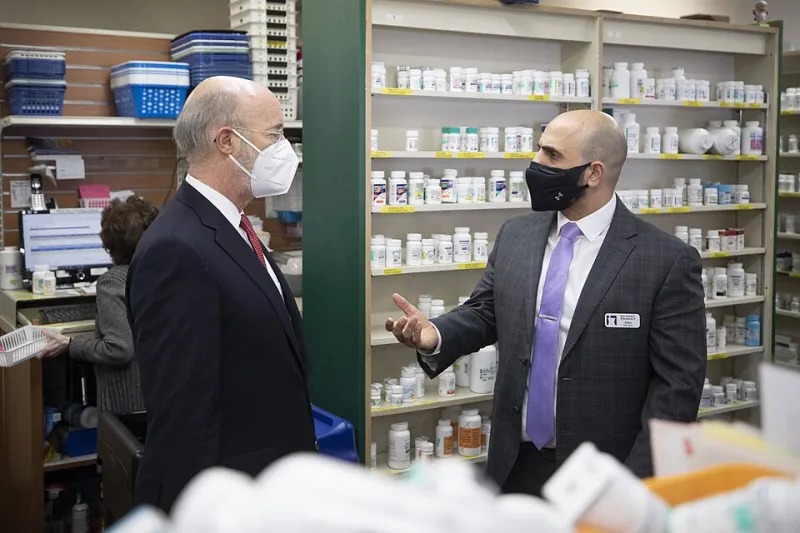
Photo: governortomwolf, CC BY 2.0, via Wikimedia Commons
Most Americans who walk into a Mexican pharmacy see exactly what they came for: a counter, a price list, and a shelf of medications that cost less than back home. What they routinely miss is everything else happening a few steps away.
Across Mexico, pharmacies increasingly operate as hybrid health access points — attached consultation rooms, nurse-staffed screening stations, and walk-in vaccination services that require no appointment, no insurance card, and often no wait longer than a coffee order. For US visitors, understanding this menu of services can turn a routine refill trip into a full preventive care visit.
1. Flu Shots, No Appointment Necessary
Seasonal influenza vaccines are widely available at pharmacy consultation counters in Mexican cities and border towns, typically administered by a licensed physician or nurse on site. The cost generally runs well below the out-of-pocket US price, and walk-in service is the norm rather than the exception. Ask for the "vacuna contra la influenza" and expect to fill out a brief one-page intake form.
2. Travel Vaccines for the Next Trip
Hepatitis A, typhoid, and tetanus boosters — staples of pre-travel preparation for Americans heading to the Caribbean, Central America, or further abroad — are commonly stocked at larger Mexican pharmacies and travel clinics. For US travelers facing multi-week waits at home clinics or three-figure cash prices, getting vaccinated during a Mexico visit can be both faster and cheaper. Bring your vaccination record card so the provider can document the dose properly.
3. Blood Pressure Checks in Minutes
Many pharmacies keep a digital blood pressure monitor at or near the counter and will take a reading free or for a nominal charge. For Americans managing hypertension without regular access to a primary care physician, this is a no-cost way to track numbers between formal visits. Record the reading, the date, and the cuff size used.
4. Glucose Screening on the Spot
Finger-stick glucose tests are similarly common, particularly at pharmacies with attached medical consultorios. For patients with diabetes or prediabetes, a quick reading paired with an inexpensive supply of test strips and lancets makes a pharmacy trip functionally equivalent to a mini endocrinology check-in.
5. Rapid Diagnostic Tests
Pregnancy tests, rapid strep screens, urinalysis strips, and blood type tests are frequently available either as pharmacist-administered services or as inexpensive take-home kits. In an era where a US urgent care visit for a strep test can easily exceed $150 out of pocket, the math speaks for itself.
6. Cholesterol and Wellness Panels
Larger pharmacy-adjacent clinics and independent labs throughout Mexico offer lipid panels, metabolic workups, and general wellness blood draws at a small fraction of US lab pricing — often with same-day or next-day results. No referral is typically required; you simply request the panel.
7. Brief Physician Consultations
The consultorio attached to many pharmacies exists for exactly this purpose: a short, low-cost appointment with a licensed physician who can review symptoms, interpret a screening result, and write a prescription if needed. Fees are commonly in the range of a few hundred pesos, and many providers accommodate Spanish-averse visitors with printed documentation or basic English.
What to Keep for Your Records Back Home
The preventive value of these services depends entirely on documentation. Before leaving, make sure you have:
- A vaccination record — vaccine name, manufacturer, lot number if available, date, and administering provider's name and license number.
- Screening results in writing — blood pressure, glucose, or lab values with reference ranges and the date measured.
- Receipts — useful for health savings account documentation and for any follow-up care.
- Provider identification — the clinic or pharmacy name and address, so a US physician can follow up if needed.
Photograph everything with your phone before crossing back. Paper gets lost; cloud backups don't.
Bringing It Home to Your Doctor
All of this documentation feeds directly into continuity of care. A printed glucose log from a Mexican pharmacy, a stamped vaccination card, or a lab panel with reference ranges gives your US physician real data to work with — turning a cross-border errand into a legitimate component of your medical record.
The Bigger Picture
For uninsured and underinsured Americans, the pharmacy counter in Mexico has quietly become something closer to a low-cost wellness center: a place where a refill, a flu shot, a blood pressure check, and a lab panel can all happen in a single afternoon. The services were always there. Increasingly, American visitors are learning to ask for them.