Preventive Care Without the Price Shock: Why Middle-Class Americans Are Booking Wellness Visits in Mexico
There is a particular frustration that defines American healthcare in the 2020s: carrying insurance and still being unable to afford the care that keeps you well. For tens of millions of working adults, annual deductibles now routinely exceed $3,000 to $7,000 — a financial threshold that effectively prices out routine preventive services long before the calendar year turns. Blood panels, imaging studies, nutritional counseling, and cardiovascular risk assessments are not luxuries. Yet for a significant portion of the US middle class, they function as exactly that.
What is quietly changing this equation is geography. Across border cities and major metropolitan areas in Mexico, a network of wellness-oriented clinics has emerged to serve not just local patients, but a growing stream of health-conscious Americans who have done the arithmetic and found the numbers undeniable.
The Preventive Care Gap Nobody Talks About
American health policy discussions tend to focus on catastrophic costs — the $100,000 hospital stay, the specialty drug priced out of reach. Less attention is paid to the slow financial erosion of staying healthy. Under the Affordable Care Act, insurance plans are required to cover a defined set of preventive services at no cost-sharing. In practice, however, that list is narrower than most patients assume, and billing ambiguities frequently result in unexpected charges even for nominally "covered" visits.
Services that fall squarely into the category of proactive wellness — comprehensive metabolic panels beyond basic screenings, advanced lipid profiles, body composition analysis, hormonal assessments, sleep studies, and integrative nutrition consultations — regularly sit outside insurance coverage entirely. A patient who wants a full-picture health evaluation, rather than a cursory annual physical, may face out-of-pocket costs ranging from several hundred to several thousand dollars depending on their zip code and provider network.
For many Americans, the response has been avoidance. Deferred screenings, skipped follow-ups, and wellness goals that remain perpetually aspirational are the predictable result of a system that rewards acute intervention over proactive maintenance.
What Mexican Wellness Clinics Are Actually Offering
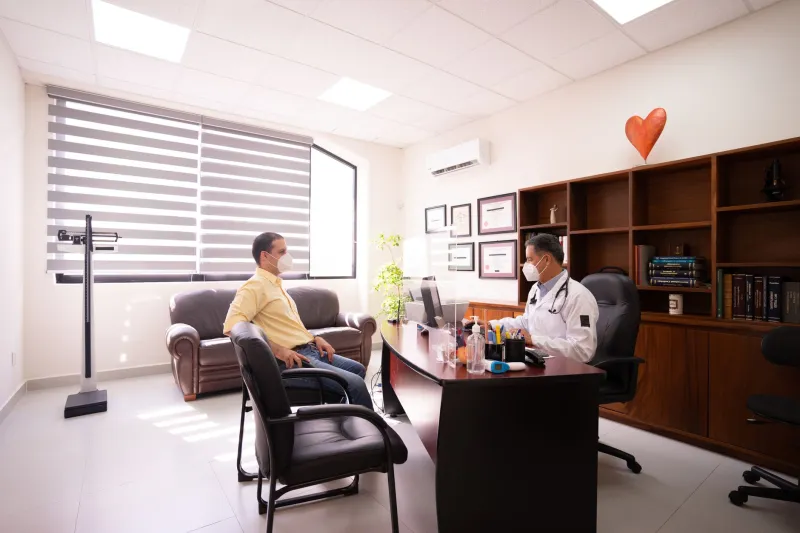
The clinics drawing American patients south of the border are not, for the most part, bare-bones facilities offering discounted care. Many are modern, well-equipped practices staffed by physicians trained in both Mexican and international medical systems, offering structured preventive packages designed with the health-aware consumer in mind.
A representative comprehensive wellness package at a clinic in Monterrey, Guadalajara, or Tijuana might include a complete blood count, comprehensive metabolic panel, thyroid function testing, fasting glucose and insulin levels, a full lipid profile including advanced markers, a urinalysis, a resting electrocardiogram, and a consultation with a physician to review findings — all bundled for between $150 and $350 USD. In many US cities, assembling that same menu of services through a private-pay lab and physician visit would cost anywhere from $800 to over $2,000.
Beyond laboratory work, a number of Mexican clinics have invested in lifestyle medicine programming: registered dietitian consultations, fitness assessments using body composition technology, stress management evaluations, and chronic disease risk counseling. These are precisely the services that American preventive medicine advocates have long argued should be central to healthcare — and precisely the services that US insurance structures consistently undervalue.
Imaging services represent another significant draw. Abdominal ultrasounds, chest X-rays, bone density scans, and even echocardiograms are available at Mexican diagnostic centers at costs that American patients frequently describe as startling in their affordability. A bone density scan that might carry a $250 to $400 bill after insurance adjustments in the United States can often be obtained for $40 to $80 USD in major Mexican cities.
The Profile of the Patient Making This Choice
It would be a mistake to characterize the Americans seeking preventive care in Mexico as exclusively uninsured or economically marginalized. Survey data and firsthand accounts paint a more nuanced picture. Many are fully insured, college-educated professionals in their 40s and 50s — precisely the demographic most likely to prioritize preventive health and most likely to be frustrated by the gap between what their plan covers and what comprehensive wellness actually requires.
Frequent travelers and retirees living part of the year near the border represent another significant cohort. For this group, the logistics of crossing into Mexico for a half-day wellness visit are minimal, and the financial calculus is straightforward. Some have established ongoing relationships with Mexican physicians who manage their preventive care longitudinally, sharing records with US-based providers when necessary.
Telemedicine has added a new dimension to this dynamic. Several Mexican clinics now offer hybrid models in which initial consultations and results reviews occur via video platform, with in-person visits reserved for physical examinations and procedures. This integration of digital health infrastructure has made preventive care in Mexico more accessible to Americans who do not live within convenient driving distance of the border.
Navigating the Practical Realities
For Americans considering this approach, several practical considerations merit attention. Medical record portability is a legitimate concern: patients should request complete documentation of all tests performed, results received, and clinical impressions noted, in formats compatible with US electronic health record systems. Most established wellness clinics in Mexico are accustomed to this request and prepared to fulfill it.
Language is less of a barrier than many assume. Physicians at clinics that actively serve American patients typically communicate fluently in English, and administrative staff at larger facilities are often bilingual. That said, patients traveling to smaller cities or rural areas should prepare accordingly.
It is also worth understanding that HSA and FSA funds — the tax-advantaged accounts many Americans use to offset medical costs — may in some circumstances be applied to qualified medical expenses incurred abroad, including physician consultations and diagnostic testing. Patients should verify eligibility with their plan administrator before assuming applicability.
A Different Conversation About Healthcare Value
What the movement toward preventive care in Mexico ultimately represents is a recalibration of expectations. American patients are no longer simply accepting the premise that comprehensive wellness is a premium product available only to those with elite insurance coverage or substantial disposable income. They are finding alternatives, and those alternatives are, by measurable standards, delivering genuine clinical value.
The broader implication for US healthcare economics is worth considering. When patients self-finance preventive services abroad because domestic costs are prohibitive, the long-term consequence is a population that arrives at the American healthcare system sicker than necessary — precisely the outcome that preventive medicine exists to avoid.
For now, the patients booking wellness packages in Monterrey and Tijuana are voting with their travel itineraries. They are not abandoning the American healthcare system so much as supplementing it, filling the gaps that high deductibles and narrow coverage have left behind. In doing so, they are quietly demonstrating that the geography of good health does not have to end at the US border.