The Diagnostic Gap: How Americans Are Accessing Affordable Imaging and Lab Work Through Mexican Medical Networks
Photo: Courtesy of NIAID Malcolm Houston, Public domain, via Wikimedia Commons
For many Americans, the path to a diagnosis is paved with financial anxiety. Before a physician can recommend a treatment plan, patients frequently face a gauntlet of prerequisite testing — MRIs, CT scans, echocardiograms, genetic panels, and specialized bloodwork — each carrying its own billing code and, in many cases, its own staggering price tag. Even with insurance coverage, high deductibles can leave patients absorbing thousands of dollars in diagnostic costs before meaningful care begins.
That financial reality is prompting a quiet but significant shift. Across border communities and increasingly among patients in interior US states, Americans are scheduling diagnostic appointments at accredited Mexican medical facilities — not as a last resort, but as a deliberate, cost-conscious strategy for managing their health.
What Diagnostic Testing Actually Costs on Both Sides of the Border
The price disparity between US and Mexican diagnostic services is not marginal — it is categorical. A brain MRI without contrast at a US hospital can range from $1,500 to $3,000 depending on geography and facility type. The same procedure at a well-equipped private imaging center in cities like Monterrey, Guadalajara, or Tijuana typically falls between $150 and $350, often with same-day or next-day availability.
CT scans tell a similar story. An abdominal CT with contrast — commonly ordered to evaluate unexplained pain, monitor known conditions, or assess organ function — carries an average US price of approximately $2,700 at hospital facilities. In Mexico, the comparable procedure is frequently available for $200 to $450, performed on modern equipment that meets international quality standards.
Laboratory work presents perhaps the most striking contrast. A comprehensive metabolic panel paired with a lipid profile, thyroid function tests, and a complete blood count might generate a US bill of $600 to $1,200 depending on whether a physician's office, hospital lab, or independent laboratory processes the samples. Mexican private laboratories in major metropolitan areas routinely complete the same panel for $40 to $120, with digital results often delivered within 24 hours.
For patients requiring more specialized analysis — hormone panels, autoimmune markers, tumor markers, or pharmacogenomic testing — the savings can be even more pronounced. Genetic testing panels that cost upward of $3,000 through US specialty labs have counterparts at Mexican genomic medicine centers priced at $400 to $900.
The Bundled Approach: Diagnostics Plus Consultation
One of the most strategically effective approaches emerging among American medical travelers is what practitioners and patient advocates informally call the "diagnostic bundle" — a coordinated visit that pairs imaging or laboratory services with a specialist consultation on the same day or within the same trip.
In the United States, this kind of coordinated care is rarely available at comparable prices. Patients frequently wait weeks between ordering a test, receiving results, and securing a follow-up appointment with a specialist who can interpret those results in clinical context. Each step generates a separate bill.
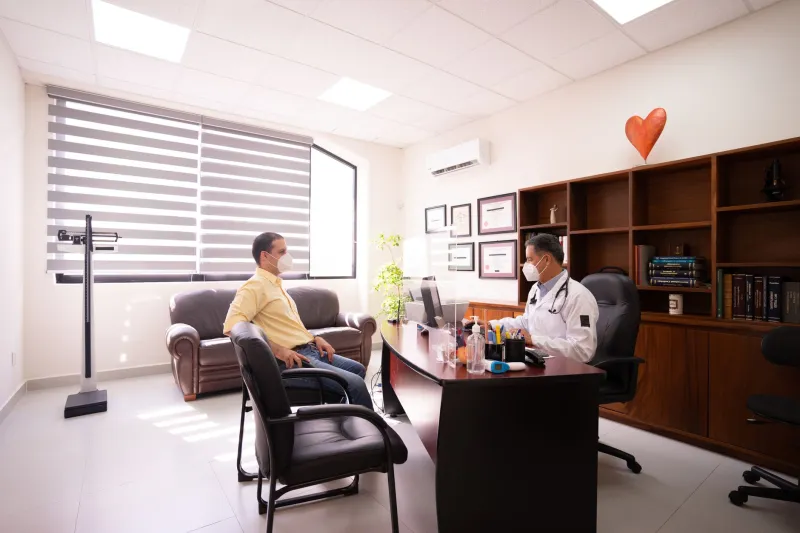
At integrated private medical centers in Mexico, the workflow is often compressed and consolidated. A patient concerned about cardiac symptoms, for example, might schedule an echocardiogram, an electrocardiogram, and a consultation with a cardiologist — all within a single visit. The total cost of this coordinated assessment, which might exceed $5,000 in the United States even with insurance, can be accomplished in Mexico for $400 to $800.
This model is particularly valuable for patients facing complex or ambiguous diagnoses who want a comprehensive health picture before committing to a treatment pathway. Rather than proceeding on incomplete information — or delaying care because individual tests are unaffordable — these patients arrive at treatment decisions with a full diagnostic profile in hand.
Practical Considerations for American Patients
Navigating diagnostic services in Mexico requires some preparation, but the process is considerably more straightforward than many Americans anticipate. Several factors are worth understanding before scheduling.
Facility accreditation matters. Many private hospitals and imaging centers in major Mexican cities hold accreditation from the Joint Commission International (JCI) or operate under standards aligned with Mexican health ministry (COFEPRIS) regulations. Patients should confirm the credentials of any facility they consider, particularly for complex imaging or specialized laboratory work.
Bring your medical records. Arriving with existing imaging studies, prior lab results, and a summary of current medications allows consulting physicians to provide meaningful interpretation rather than beginning from zero. Many Mexican specialists have trained internationally and are comfortable reviewing documentation in English.
Understand the results transfer process. Most reputable Mexican diagnostic centers provide results in digital format — either via email or a patient portal — and can issue reports in English upon request. These documents are generally compatible with US physician records systems and can be shared with your primary care provider upon return.
Plan for cash or card payment. While some larger facilities in border cities accept US insurance on an out-of-network basis, most Mexican private diagnostic centers operate on a direct-pay model. Patients should verify payment options in advance. Many Americans find that the out-of-pocket cost in Mexico remains substantially lower than their US insurance deductible, making direct payment the most practical option regardless.
Who Is Making This Choice — and Why
The profile of Americans pursuing diagnostic services in Mexico has broadened considerably in recent years. Early adopters were primarily border-region residents with established familiarity with Mexican healthcare. Today, patients from Texas, California, Arizona, and New Mexico make up a significant portion of medical travelers, but the demographic increasingly includes individuals from Midwest and Southeast states who factor in travel costs and still find the financial case compelling.
Common motivations include high-deductible health plans that render US diagnostics effectively unaffordable until the deductible is met, extended wait times for imaging appointments at US facilities, and the desire to obtain a second diagnostic opinion outside the US healthcare system before proceeding with a recommended treatment.
Patients managing chronic conditions — including autoimmune disorders, metabolic disease, cardiovascular conditions, and oncological follow-up — are particularly represented among those who have integrated periodic Mexican diagnostic visits into their long-term health management strategies.
A Complement to US Care, Not a Replacement
It bears emphasis that the most effective use of Mexican diagnostic services is as a complement to, rather than a substitute for, an ongoing relationship with US-based primary care. Results obtained in Mexico can and should be shared with American physicians, who can incorporate that information into treatment planning. In many cases, patients find that arriving at a US specialist appointment with complete, recent diagnostic data — rather than waiting for testing to be ordered and processed domestically — actually accelerates the care they receive.
PharmMexico serves as a resource for Americans seeking to understand the full landscape of healthcare options available in Latin America, from pharmacy services to clinical consultations and diagnostic networks. The goal is informed decision-making — ensuring that cost is not the determining factor in whether a patient gets the health information they need to make sound medical choices.
For Americans standing at the threshold of a diagnostic process and confronting costs that feel insurmountable, the Mexican medical network represents a legitimate, increasingly well-documented alternative worth serious consideration.